

Common Vitamin B12 Deficiency Symptoms You Shouldn't Ignore
Could symptoms that seem like stress or aging sometimes point to a health issue that needs attention? Searching for deficiency in vitamin b12 symptoms often starts when fatigue, tingling, or trouble concentrating becomes hard to ignore.
These signs can have many causes, so a symptom list can’t confirm what’s happening. Vitamin B12 deficiency may affect energy, thinking, and nerve function, but symptoms vary from person to person. Numbness, changes in balance, or other new neurological symptoms deserve clinical assessment rather than guesswork.
This guide covers common and potentially serious symptom patterns, why they can be easy to miss, and how a healthcare professional may assess them. It also explains what details to share, including when symptoms began, how they’ve changed, your diet, digestive health, and medicines. Testing can help clarify whether B12 deficiency is involved. Don’t use symptoms alone to diagnose yourself or start supplements instead of seeking appropriate medical advice.
Key Takeaways
- Deficiency in vitamin b12 symptoms can vary and may develop gradually, so look for patterns rather than relying on one sign.
- B12 deficiency may affect nerve function, red blood cells, and thinking, but symptoms don’t follow one fixed pattern.
- Fatigue, tingling, or brain fog alone can’t confirm a B12 deficiency. Other causes may need consideration.
- Prepare for a healthcare discussion by noting when symptoms began and bringing relevant diet, medicine, supplement, and health history.
- Discuss diagnosis and next steps with a qualified professional before choosing a B12 supplement or delivery route.
Deficiency in vitamin B12 symptoms: Which signs may appear first?
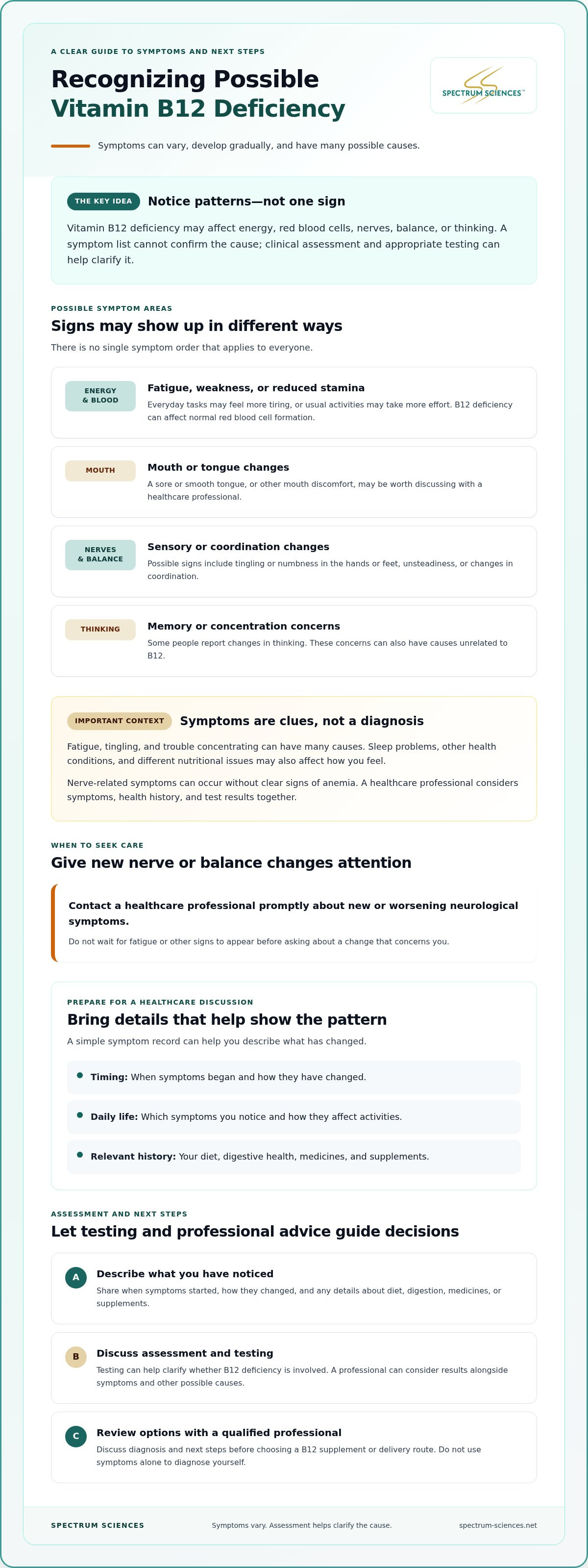
Possible deficiency in vitamin B12 symptoms include changes in energy, the mouth, or nerve function. Use this checklist to notice patterns, not to diagnose yourself. Symptoms vary, may develop gradually, and can also have causes unrelated to B12.
Vitamin B12 deficiency means the body doesn’t have enough B12 to support its normal functions. It can affect red blood cell formation and the nervous system, but symptoms alone can’t confirm the cause. The overview of Vitamin B12 deficiency describes a range of possible signs and causes.
For a brief overview of possible symptoms, watch this video:
Early and general signs people may notice
Fatigue, weakness, or reduced stamina may occur with B12 deficiency. These changes can be subtle: everyday tasks may feel more tiring, or usual activities may take more effort.
These signs aren’t specific to B12. Sleep problems, other health conditions, and different nutritional issues can also affect energy. A clinician may consider B12 among several possible causes, rather than treating tiredness alone as proof of deficiency.
Possible signs can involve more than one area:
- Energy and blood: Fatigue or weakness may occur if deficiency affects normal red blood cell formation.
- Mouth: A sore or smooth tongue, or other mouth discomfort, may need assessment.
- Nerves and balance: Numbness, tingling, unsteadiness, or changes in coordination are possible signs.
Mouth, nerve, and balance symptoms to recognize
Mouth changes can have several explanations. Note how long they’ve lasted and mention them during a healthcare discussion. The same applies to tingling or numbness in the hands or feet, which can have causes beyond B12 deficiency.
Balance or coordination changes can interfere with walking and other daily activities. Contact a healthcare professional promptly about new or worsening neurological symptoms. Don’t wait for fatigue or other signs to appear before asking about a change that concerns you.
Recognizing a pattern is useful, but it’s only a starting point. Clinical assessment and appropriate testing can help determine whether B12 deficiency, another condition, or a different factor may be involved.
How vitamin B12 deficiency can affect nerves, blood, and thinking
Patterns in deficiency in vitamin B12 symptoms may reflect B12’s role in blood cell formation and nervous system function. The body uses B12 to make healthy red blood cells and maintain nerve cells. If levels are too low, changes may affect more than one body system, but there’s no single symptom order that applies to everyone.
Some people notice changes in energy or thinking, while others experience sensory or balance concerns. Symptoms differ in type and severity. A pattern may raise a question about B12, but it can’t confirm a diagnosis.
Why blood-related symptoms may not tell the whole story
B12 deficiency can interfere with normal red blood cell formation. If it leads to anemia, a person may have symptoms related to reduced oxygen delivery, such as tiredness or weakness. But the absence of known anemia doesn’t rule out B12 deficiency. Nerve-related symptoms can occur without the classic blood findings, so clinicians consider symptoms and test results together.
Blood test results also need context. A healthcare professional can review them alongside symptoms, health history, and other possible causes. The NHS overview of symptoms of vitamin B12 deficiency describes signs that may involve different parts of the body.
Neurological and cognitive changes need careful attention
B12 supports the nervous system, including the protective covering around nerves. When B12 is low, possible effects include tingling or numbness, difficulty with balance, or changes in coordination. Some people may also report memory or concentration concerns. These symptoms can have many causes, so they aren’t proof of a B12 problem.
There’s no reliable timeline in which one symptom must appear before another. A person may have nerve changes without clear signs of anemia, while someone else may notice mostly general symptoms. This variation is one reason not to rely on symptom lists alone.
A possible symptom pattern can guide a conversation with a clinician, but only appropriate assessment can help confirm the cause. Contact a healthcare professional promptly about new, persistent, or worsening changes in sensation, balance, coordination, or thinking. Share when they began and how they affect daily activities.
If a clinician confirms a need to consider supplementation, discuss the suitable form and delivery route with them. Spectrum Sciences offers Activated B12 Oil, a transdermal supplement containing Methyl-B12 and Adenosyl-B12. It isn’t a diagnosis or a substitute for clinician-directed care.
Could these symptoms be something other than B12 deficiency?
The phrase deficiency in vitamin B12 symptoms can make common concerns sound more specific than they are. Fatigue, tingling, and trouble concentrating may occur with B12 deficiency, but none of these signs alone proves it. Similar symptoms can have nutritional, medical, medicine-related, or lifestyle causes.
For example, low iron, thyroid problems, diabetes, nerve pressure, poor sleep, and stress may also affect energy, sensation, or focus. Some medicines can contribute to symptoms or affect nutrient levels. A clinician can consider these possibilities alongside your health history and test results. Harvard Health on B12 deficiency also reviews the condition’s possible signs and causes.
Why symptom lists cannot confirm a deficiency
Symptoms overlap across many conditions, and the same condition can affect people in different ways. A healthcare professional may ask when symptoms began, review your health and medicine history, and decide whether examination or testing is appropriate. Neither having a symptom nor lacking one establishes your B12 status.
A symptom checklist can help you prepare for a discussion, but it can’t replace clinical assessment. Avoid starting high-dose supplements solely because an online list seems to match. Supplements may not address the real cause. A clinician can advise whether testing or another next step is suitable.
This comparison can help organize what to discuss. It isn’t a way to identify the cause on your own.
| Symptom observation | Why it’s nonspecific | What to discuss with a clinician |
|---|---|---|
| Fatigue or low energy | Sleep, stress, anemia, and other health concerns can affect energy. | When it began, how it affects daily life, and any related changes. |
| Tingling or numbness | Nerve pressure, diabetes, and other conditions may cause altered sensation. | Where it occurs, whether it is persistent, and whether it is changing. |
| Brain fog or poor focus | Mood, sleep, medicines, and other medical factors can affect concentration. | Changes in memory or focus, medicine use, and relevant health history. |
| Unsteadiness or weakness | Several health issues can affect strength, coordination, or balance. | When it started, whether it is worsening, and how it affects movement. |
When symptoms call for prompt medical advice
Arrange timely advice if numbness, weakness, or balance changes persist or worsen. New or ongoing neurological symptoms deserve attention, even if you aren’t sure what is causing them. Sudden, severe symptoms should be assessed through appropriate urgent medical services. Don’t use a symptom list to decide the cause or delay care when symptoms are concerning.
What to do if you recognize possible B12 deficiency symptoms
If deficiency in vitamin B12 symptoms seem familiar, treat that as a reason to gather information, not as a diagnosis. Note what you’re experiencing, when it began, and whether it’s changing. Then arrange a discussion with a healthcare professional who can help decide what evaluation is appropriate.
Some preparation can make that conversation more useful. Bring a list of current medicines and supplements, your usual eating pattern, and relevant health history. These details can help a clinician consider possible causes and choose suitable next steps.
What to note before speaking with a healthcare professional
Keep a brief record of symptoms and changes. Include when each began, how often it occurs, and whether it affects activities such as walking, working, or concentrating. Note recent changes in diet or health, but don’t assume they explain the symptoms.
- List prescription and over-the-counter medicines, plus supplements. Add approximate start dates when you know them.
- Describe your usual diet, including any limits on animal-based foods.
- Note relevant health conditions, digestive concerns, or past test results.
This information doesn’t replace an assessment. It gives the clinician a clearer picture of your situation.
What testing and follow-up may involve
A healthcare professional decides whether testing is needed based on symptoms, health history, and individual circumstances. A blood test may measure serum B12. If the result is unclear, a clinician may consider follow-up markers such as methylmalonic acid (MMA) or homocysteine.
Test results need clinical interpretation. Don’t start high-dose B12 supplements or change prescribed medicines based only on an online checklist. Ask the clinician what the findings mean, whether other causes should be considered, and what follow-up is appropriate.
Spectrum Sciences offers an Organic Acids Test (OAT), but it should not be presented as a test that diagnoses B12 deficiency. For general reading, see vitamin B12 deficiency treatment options. Discuss any supplement or delivery route with a qualified professional as part of your care plan.
After assessment: discuss B12 options with a qualified professional
If evaluation points to a need for B12 support, discuss next steps with a qualified healthcare professional. The right approach depends on your assessment and individual needs. Supplements aren’t a substitute for diagnosis or clinician-directed care, and deficiency in vitamin B12 symptoms alone don’t show which option is suitable.
Supplement form and delivery route are also worth discussing. A clinician can help you consider whether a supplement fits your plan and what to check before using it. For an overview of delivery formats, see this guide to vitamin B12 oil and transdermal delivery.
Questions to ask before choosing a B12 supplement
Bring your questions to the discussion, especially if you take medicines or other supplements. A qualified professional can consider your health history and explain how a product may fit with any recommended care.
- Is B12 supplementation appropriate for me based on my assessment?
- Which form and delivery route should I consider, and why?
- What ingredients should I review, and could they interact with my medicines or supplements?
- Should my symptoms or B12 status be monitored, and when should I follow up?
There isn’t one form or route that suits everyone. Avoid choosing based only on symptom lists, product claims, or another person’s experience. Ask for guidance that reflects your circumstances.
Where Spectrum Sciences’ Activated B12 Oil fits
Spectrum Sciences offers Activated B12 Oil (Transdermal Methyl-B12 & Adenosyl-B12) as a transdermal supplement option. It isn’t a diagnostic tool or a substitute for clinical evaluation and clinician-directed care. Discuss its ingredients and delivery route with a qualified professional before deciding whether it fits your needs.
Take the next step with informed care
Recognizing deficiency in vitamin B12 symptoms can help you decide what to discuss, but it can’t identify the cause. Fatigue, mouth changes, tingling, and balance concerns may have other explanations, so a symptom pattern is a starting point, not a diagnosis.
Keep a clear record of what you’ve noticed, when it began, and how it affects daily life. Share relevant medicines, supplements, diet, and health history with a healthcare professional. They can determine whether testing is appropriate and guide next steps. Seek prompt advice for new or worsening nerve or balance changes.
If you and your clinician are considering a supplement, discuss its ingredients and delivery route as part of your care plan. Spectrum Sciences’ Activated B12 Oil contains transdermal Methyl-B12 and Adenosyl-B12. It’s a supplement option, not a diagnosis or replacement for clinician-directed care.
Explore Activated B12 Oil
With careful assessment and clear information, you can take a considered next step toward understanding your health.
Frequently Asked Questions
What are the most common symptoms of vitamin B12 deficiency?
People searching for “deficiency in vitamin b12 symptoms” may be looking for fatigue, weakness, reduced stamina, a sore or smooth tongue, numbness, tingling, balance changes, or trouble with memory and focus. Symptoms vary, and some people may notice only a few. These signs can also have causes other than B12 deficiency. A symptom pattern can guide a healthcare discussion, but assessment and appropriate testing are needed to explore the cause.
Can vitamin B12 deficiency cause numbness or tingling?
Yes, numbness or tingling can occur with vitamin B12 deficiency, often in the hands or feet. B12 supports normal nervous system function, but altered sensation has other possible causes too. Note where you feel it, when it began, and whether it is changing. Contact a healthcare professional about new, persistent, or worsening numbness or tingling rather than assuming it is due to low B12.
Can you have B12 deficiency without anemia?
Yes. B12 deficiency can affect the nervous system even when anemia hasn’t been found. A normal blood count alone may not settle whether B12 deficiency is present, so clinicians consider symptoms and relevant test results together. If you have concerns such as tingling, balance changes, or memory difficulties, share them with a healthcare professional. Don’t use the absence of anemia to rule out deficiency or diagnose yourself.
How is vitamin B12 deficiency diagnosed?
Diagnosis usually involves a healthcare professional reviewing symptoms and health history alongside blood tests. A serum B12 test may be used first. If the result is unclear, the clinician may consider additional markers, such as methylmalonic acid or homocysteine. Test choices and interpretation depend on the person’s circumstances. Share any supplements you take and when you started them, so the clinician has relevant information during the assessment.
What happens if vitamin B12 deficiency is left untreated?
Untreated B12 deficiency may continue to affect blood cell formation or nerve function. Possible concerns include worsening sensory changes, balance problems, or thinking difficulties. Nerve damage can become irreversible if deficiency is left untreated, so new or worsening neurological symptoms deserve timely medical attention. These symptoms don’t prove B12 deficiency, however. A healthcare professional can assess possible causes and decide what evaluation or follow-up is appropriate.
Can fatigue alone mean you have vitamin B12 deficiency?
Fatigue alone can’t show that you have B12 deficiency. Low energy or weakness may occur with deficiency, but sleep problems, stress, other health conditions, and nutritional issues can cause similar feelings. Note how long the fatigue has lasted and how it affects daily activities. If it persists, worsens, or concerns you, discuss it with a healthcare professional rather than relying on an online symptom list.
Should I take a B12 supplement before getting tested?
Ask a healthcare professional before starting a B12 supplement solely because symptoms seem to match an online list. Fatigue, tingling, or brain fog can have many causes, and supplements aren’t a substitute for assessment or clinician-directed care. If you already take B12 or another supplement, tell the clinician what you use and when you began. They can advise whether testing is suitable and discuss next steps based on your circumstances.