

Vitamin B12 Deficiency Treatment: Transdermal Advantages
The standard pill you swallow every morning might be the very reason your energy isn't returning. If you faithfully take daily vitamins yet still struggle with persistent fatigue and brain fog, your gut may simply be blocking absorption. Conditions like digestive inflammation or low intrinsic factor make it nearly impossible for oral capsules to reach your bloodstream. Finding an effective vitamin b12 deficiency treatment shouldn't force you to choose between ineffective swallowed supplements and painful, anxiety-inducing intramuscular injections.
You aren't alone in feeling exhausted by options that fail to address how your body actually absorbs nutrients. In this guide, you'll discover how conventional therapies compare to modern delivery methods, and why direct skin permeation offers an effective, needle-free path forward. We'll explore how bypassing gastrointestinal barriers delivers active coenzymes like methylcobalamin and adenosylcobalamin directly to your cells to restore cellular energy and biological harmony.
Key Takeaways
- Understand the limits of standard oral pills and why a modern vitamin b12 deficiency treatment must bypass gut barriers to restore cellular health.
- Discover why common issues like low stomach acid, gastritis, and intestinal inflammation stop swallowed supplements from absorbing properly.
- Compare common delivery methods to see how transdermal oils eliminate the painful injection routines and sharp energy crashes linked to clinical shots.
- Learn how direct skin permeation delivers bioactive coenzymes directly into the microvasculature for steady, needle-free cellular nourishment.
- Find out why tracking functional markers like methylmalonic acid provides a more accurate view of cellular recovery than basic serum blood tests.
Understanding Vitamin B12 Deficiency Treatment and Clinical Standards
A successful vitamin b12 deficiency treatment does far more than correct a low lab score. It restores the biological foundation of your daily energy, brain function, and nerve health. Cobalamin, the scientific term for vitamin B12, serves as an essential micronutrient that every cell in your body needs. When levels drop, early intervention is critical to stop long-term physical damage, such as balance issues, memory deficits, and irreversible peripheral neuropathy. Consulting a detailed Vitamin B12 deficiency overview helps explain why recognizing these red flags early protects your long-term vitality.
The Essential Role of Cobalamin in Human Biology
Cobalamin works quietly behind the scenes to maintain metabolic order. Within the mitochondria, it acts as a necessary coenzyme that helps transform the food you consume into cellular energy. Without adequate supply, cells starve for fuel, which leads to chronic systemic fatigue.
Beyond cellular fuel, cobalamin drives two critical physiological processes:
- Nerve Protection: It maintains the protective myelin sheath that wraps around your central and peripheral nerves, ensuring rapid communication between the brain and body.
- Hematopoiesis and DNA Synthesis: It partners with folate to generate red blood cells and produce DNA, preventing large, immature red blood cells that cause macrocytic anemia.
Standard First-Line Medical Therapies
When tests confirm a deficiency, mainstream medicine traditionally reaches for high-dose oral tablets or prescription intramuscular shots. Primary care providers frequently suggest 1,000 to 2,000 microgram oral supplements each day. They assume that passive diffusion will push enough cobalamin into circulation. However, this strategy often struggles when patients live with hidden digestive barriers.
For acute neurological issues or severe malabsorption, clinicians turn to intramuscular injections to bypass the gut entirely. Clinical teams then monitor patient progress using complete blood counts and total serum cobalamin levels. Yet standard serum markers can be deceiving. Circulating cobalamin in the bloodstream does not automatically prove that active coenzymes are reaching the inside of your cells. For many people seeking an effective vitamin b12 deficiency treatment, true cellular recovery requires a more reliable, consistent path.
Why Conventional Oral Vitamin B12 Treatments Often Fail
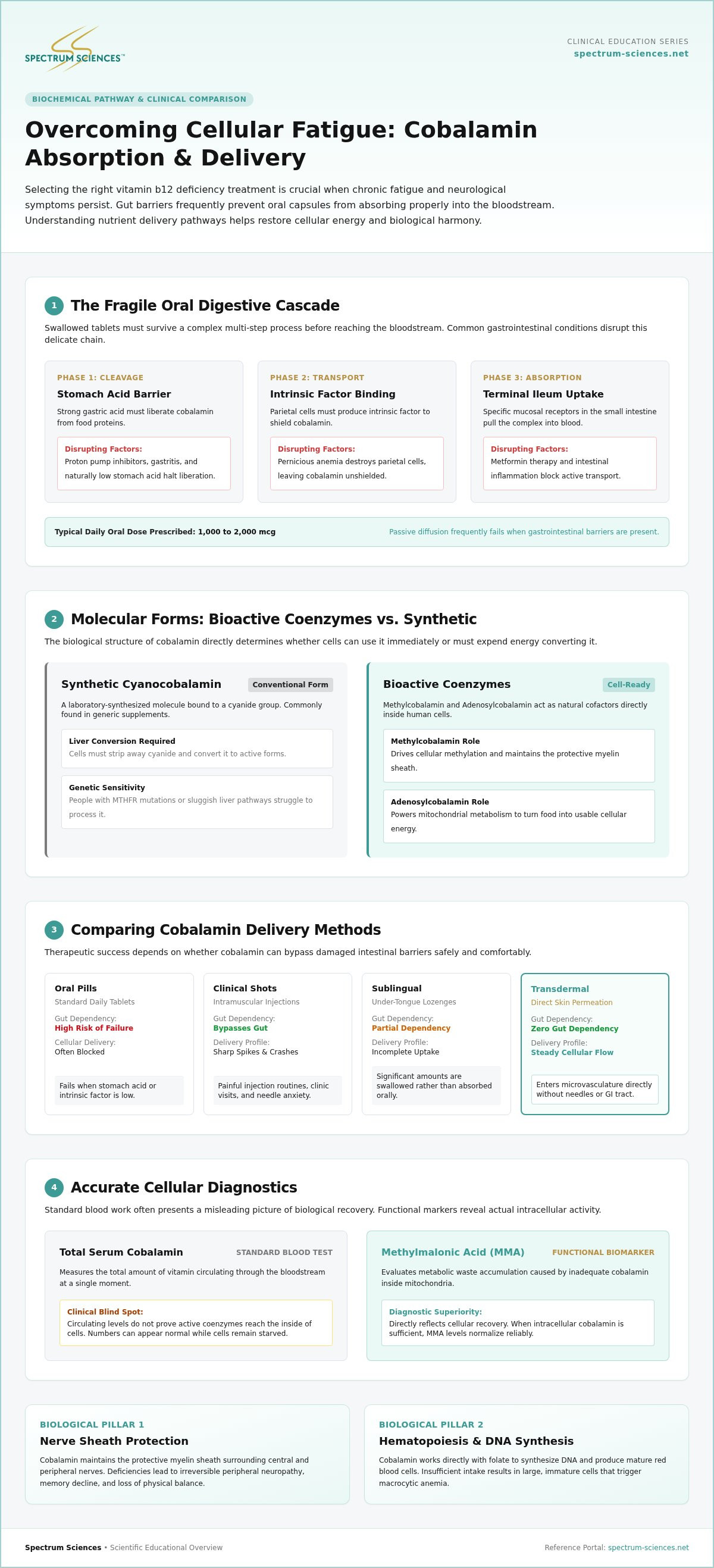
Swallowing a daily tablet feels simple, but biological nutrient uptake is anything but straightforward. Dietary cobalamin requires a delicate, multi-step digestive cascade before it can enter your bloodstream. First, strong stomach acid must separate cobalamin from food proteins. Next, specialized transport proteins must shield the nutrient until it reaches your small intestine. For millions of people, this chain breaks down, causing an oral vitamin b12 deficiency treatment to fall short.
Common digestive roadblocks like atrophic gastritis, celiac disease, or low stomach acid disrupt this fragile process. Everyday medications worsen the problem. Long-term use of proton pump inhibitors suppresses the stomach acid needed to liberate cobalamin, while metformin impairs intestinal uptake. To see why avoiding the gastrointestinal tract changes clinical outcomes, explore our guide on transdermal delivery vs oral supplements.
The Fragile Mechanism of Intrinsic Factor Absorption
Parietal cells in the stomach lining secrete intrinsic factor, a unique transport protein. In the small intestine, cobalamin binds to intrinsic factor so receptors in the terminal ileum can pull it into circulation. Autoimmune disorders like pernicious anemia destroy these parietal cells. Without sufficient intrinsic factor, swallowed capsules cannot enter the blood. They simply pass through your digestive system unabsorbed, leaving cells starved for cellular fuel.
Synthetic Cyanocobalamin Versus Bioactive Coenzymes
Most commercial tablets and standard B12 deficiency treatments rely on cyanocobalamin, a synthetic molecule bound to a cyanide group. Your liver must strip away this cyanide molecule and convert the cobalamin into bioactive coenzymes: methylcobalamin for cellular methylation and adenosylcobalamin for mitochondrial energy.
This conversion demands significant cellular energy. People with MTHFR genetic variations or sluggish liver pathways struggle to complete this biochemical transfer. Bypassing synthetic conversion with bioactive coenzymes in Activated B12 Oil supplies pure, ready-to-use coenzymes directly to cellular pathways without digestive friction.
Comparing Cobalamin Delivery Methods: Injections, Oral, Sublingual, and Transdermal
Selecting the right vitamin b12 deficiency treatment depends on balancing cellular bioavailability with everyday usability. Each delivery route interacts differently with human physiology:
- Oral Tablets: Non-invasive and inexpensive, but heavily dependent on stomach acid and intrinsic factor.
- Sublingual Lozenges: Designed to dissolve under the tongue, yet swallowed saliva pushes much of the dose into the stomach anyway.
- Intramuscular Injections: Completely bypass the digestive tract, but require needles, clinical visits, and can cause significant physical discomfort.
- Transdermal Application: Delivers nutrients directly through the skin barrier, bypassing the gut entirely without needles or clinic appointments.
Evaluating Invasiveness and Long-Term Patient Compliance
Intramuscular shots have long served as the standard medical approach for poor digestive uptake. However, recurring clinical appointments disrupt daily life, while deep needle injections often trigger anxiety and soreness. Over time, needle fatigue causes many individuals to skip doses or stop therapy early. Review our analysis of best B12 oils to see how gentle topical alternatives simplify long-term consistency from the comfort of home.
Steady Absorption Profiles Versus Peak-and-Crash Dynamics
A single intramuscular injection floods your bloodstream with a massive surge of cobalamin. Because your vascular system cannot bind such huge amounts simultaneously, the kidneys quickly filter out and excrete the excess in urine. This rapid spike often produces a temporary rush of energy followed by a sharp crash weeks before your next scheduled appointment.
Transdermal delivery eliminates this metabolic roller coaster. Specialized topical solutions allow cobalamin to diffuse slowly across the skin layers into microcirculation. This gentle flow supplies your cells with a steady, continuous stream of nutrients rather than an overwhelming flood. For individuals seeking a balanced vitamin b12 deficiency treatment, topical diffusion supports sustained cellular energy day after day.
The Science of Transdermal B12: Bypassing the Gut Efficiently
A modern vitamin b12 deficiency treatment can bypass the gut completely through the power of transdermal science. When you swallow a tablet, digestive enzymes, harsh stomach acids, and compromised intestinal linings can degrade the active nutrients. In contrast, topical delivery carries cobalamin straight through your skin. Read our detailed vitamin B12 oil guide to explore how direct skin absorption protects fragile micronutrients from digestive destruction.
How Lipid Carriers Penetrate the Stratum Corneum
The outermost layer of your skin, the stratum corneum, functions as a protective shield against the outside world. Standard water-based formulas cannot easily penetrate this barrier. Specialized lipid-carrier oils solve this challenge by blending smoothly with the natural fats between your skin cells.
This biological interaction allows cobalamin molecules to glide past the outer epidermis. Once through, the nutrients enter the dense network of dermal microcapillaries beneath the surface. From there, intact cobalamin molecules flow directly into systemic circulation without losing biological potency along the way.
Dual Coenzyme Synergy: Methylcobalamin and Adenosylcobalamin
A truly restorative vitamin b12 deficiency treatment delivers the exact forms your metabolism uses every day. Rather than relying on synthetic cobalamin that requires liver conversion, advanced transdermal formulations use dual bioactive coenzymes:
- Methylcobalamin: Powers the methylation cycle, supports neurological health, and recycles homocysteine into methionine to protect vascular function.
- Adenosylcobalamin: Operates directly inside cell mitochondria, fueling the citric acid cycle to generate steady physical energy at the cellular level.
Supplying both pre-activated forms simultaneously ensures that neither cellular energy nor nerve restoration gets neglected. Your body receives ready-to-use coenzymes that start working immediately.
Creating an Optimized Protocol for Restoring Intracellular B12
A comprehensive vitamin b12 deficiency treatment works best when you view your metabolism as an interconnected system. Restoring vitality requires more than randomly applying nutrients. It demands accurate functional tracking, supportive trace minerals, and steady daily application.
Step 1: Functional Testing Beyond Routine Serum Blood Panels
Standard serum blood panels often give a false sense of security. These tests tally all circulating cobalamin in your blood, including inactive analogs that your cells cannot use. As a result, blood levels can appear normal even while tissues starve.
Functional testing reveals a clearer picture. When intracellular B12 drops, methylmalonic acid accumulates in the body because cobalamin-dependent enzymes cannot clear it. Utilizing an at-home Organic Acids Test (OAT) measures urinary methylmalonic acid directly. This test confirms true cellular starvation before neurological problems worsen.
Step 2: Supporting Essential Metabolic Cofactors
Restoring cobalamin jumpstarts the cellular methylation cycle. However, this metabolic engine requires essential micronutrient partners to run smoothly without creating chemical bottlenecks:
- Molybdenum Oil: Provides transdermal sulfur support to help clear toxic sulfites generated during active methylation.
- Selenium and Iodine Oils: Provide targeted mineral support to sustain thyroid hormone conversion and optimal cellular metabolic rates.
- Protocol Support Multivitamin & Mineral Supplement: Supplies balanced B-complex cofactors, zinc, and magnesium to keep related biochemical pathways in balance.
Step 3: Daily Application and Monitoring
Consistency is key to rebuilding intracellular reserves. Apply Activated B12 Oil once daily to clean, dry skin on areas with a high density of microcapillaries, such as the inner wrists, neck, or chest. Massaging the oil into thin skin allows the lipid carrier to penetrate quickly without leaving greasy residue.
A steady daily routine prevents the sharp peaks and valleys linked to monthly injections. Over several weeks, continuous nutrient delivery helps restore cellular cobalamin pools and sustains your day-to-day energy. Review our research on transdermal B12 absorption rate to learn how modern lipid carriers optimize everyday nutrient uptake.
Reclaiming Cellular Vitality Through Advanced Transdermal Care
Living with chronic exhaustion when daily supplements fail can feel deeply discouraging. Real recovery begins when you look past the digestive roadblocks that prevent swallowed capsules from absorbing into your bloodstream. Choosing a modern vitamin b12 deficiency treatment provides a dependable bridge between ineffective oral tablets and painful clinic injections. Specialized lipid carriers bypass gut barriers entirely, delivering essential nutrients smoothly through your skin.
As a trusted national supplier of specialized transdermal wellness products, Spectrum Sciences focuses on biological harmony. Our formula provides pure bioactive methylcobalamin and adenosylcobalamin to support cellular methylation and sustained mitochondrial energy. By avoiding the sharp peaks and crashes of intramuscular shots, you give your cells a steady stream of nourishing support.
Your journey toward renewed mental clarity and lasting physical energy begins with the right delivery method. Embrace a gentler, needle-free approach and help your body thrive once again.
Frequently Asked Questions
How long does a vitamin B12 deficiency treatment take to resolve symptoms?
Recovery timelines depend on symptom severity and the delivery route chosen. Hematological markers often improve within a few weeks, which brings noticeable relief from daily fatigue. Neurological healing takes longer because damaged nerve tissue repairs slowly. Following a consistent vitamin b12 deficiency treatment for several months helps rebuild protective myelin sheaths and restores depleted intracellular reserves throughout the body.
Can you treat a vitamin B12 deficiency without painful intramuscular injections?
Yes, transdermal nutrient delivery offers an effective non-invasive alternative to routine clinical shots. Swallowed tablets often fail because gastrointestinal issues block absorption. Transdermal oils solve this issue by transporting cobalamin molecules through the outer skin layers directly into local capillaries. This method bypasses intestinal roadblocks entirely, giving you a steady, needle-free way to restore cellular levels from home.
Why do my lab tests show normal B12 levels while I still experience severe fatigue?
Standard serum blood tests measure all cobalamin circulating in your bloodstream, not what actually enters your cells. A routine blood panel counts inactive analogs alongside active vitamins. If your cells lack the cofactors or receptors to absorb cobalamin, blood numbers look normal while tissues starve. Functional testing, like assessing methylmalonic acid via an Organic Acids Test, reveals true cellular deficiency.
What is the difference between cyanocobalamin, methylcobalamin, and adenosylcobalamin?
The primary difference lies in bioavailability and biological function. Cyanocobalamin is a synthetic molecule that your liver must decyanate and convert into usable coenzymes. Methylcobalamin and adenosylcobalamin are bioactive forms that bypass this enzymatic step. Methylcobalamin supports your nervous system and cellular methylation. Adenosylcobalamin fuels mitochondrial energy production. Delivering both active forms provides immediate support for nerves and physical energy.
How does transdermal B12 oil absorb through the skin into the bloodstream?
Specialized lipid carriers temporarily fluidize the skin's outer stratum corneum layer to enable passage. Because cobalamin molecules are relatively large and water-soluble, standard creams cannot easily penetrate the skin barrier. Formulating cobalamin within a targeted lipid matrix allows it to slip between epidermal cells. Once past the surface, the nutrients enter the dense capillary beds of the dermis for systemic distribution.
Are there specific cofactors required to help the body utilize vitamin B12 properly?
Cobalamin requires several trace minerals and B-complex vitamins to function correctly within metabolic pathways. Activating methylation demands adequate folate, while molybdenum helps process sulfur metabolites. Additionally, iodine and selenium support the thyroid hormones needed for cellular uptake. Taking a balanced formula like the Protocol Support Multivitamin & Mineral Supplement alongside targeted mineral oils ensures your cells possess every necessary cofactor.
Can digestive disorders like Crohn's or gastritis prevent oral B12 supplements from working?
Yes, chronic gastrointestinal disorders directly disrupt the multi-step digestive sequence required for oral absorption. Gastritis impairs the stomach acid and intrinsic factor needed to liberate and bind dietary cobalamin. Conditions like Crohn's disease inflame the terminal ileum where nutrient uptake occurs. Choosing a transdermal vitamin b12 deficiency treatment circumvents damaged digestive tissues entirely to deliver active coenzymes straight into circulation.