

B12 Patches vs Oil: Choosing the Most Effective Transdermal Delivery System
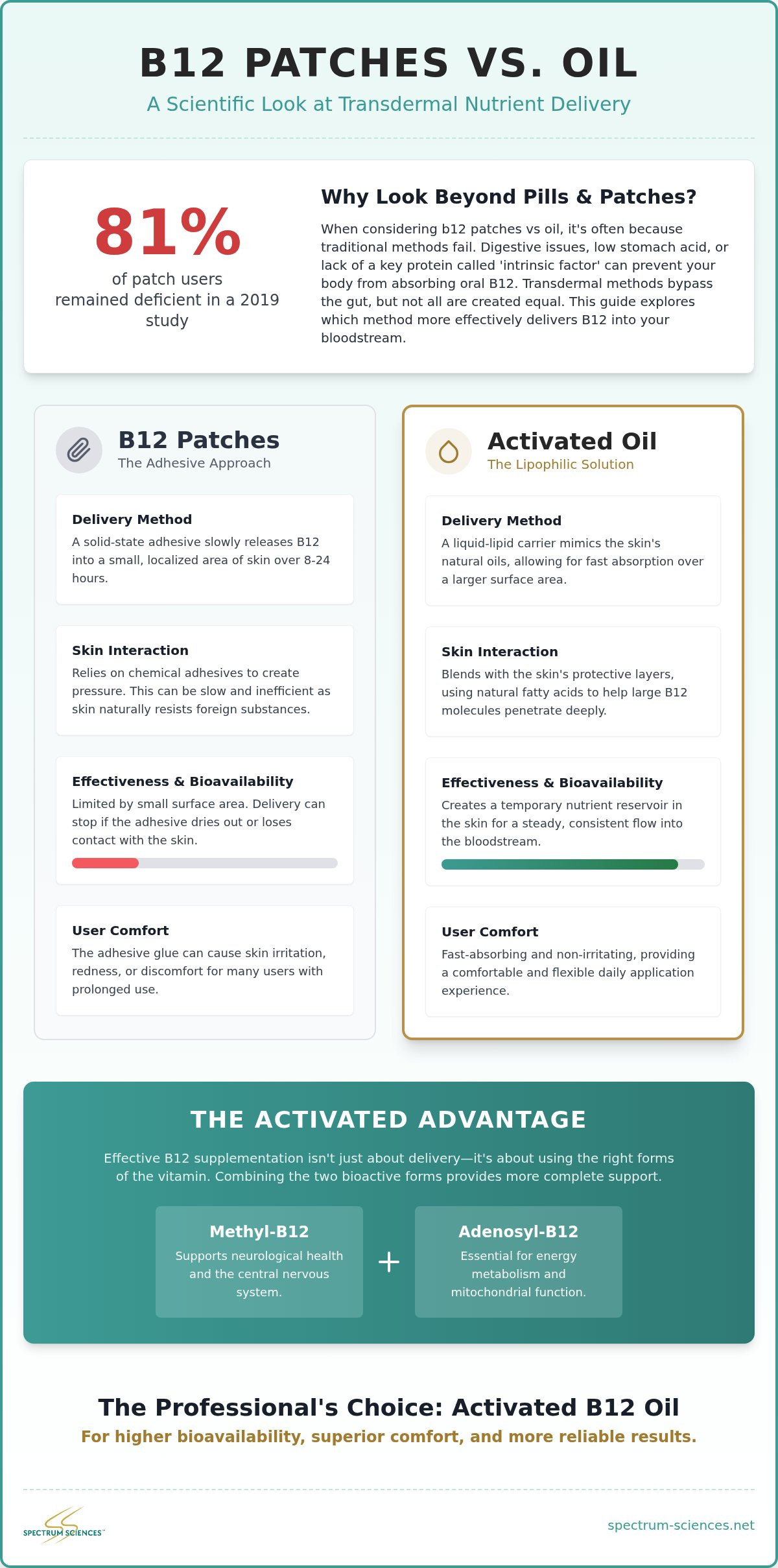
You might think a simple sticker on your arm is the best way to fix a vitamin deficiency, but research shows that many patches fail to deliver what they promise. A 2019 study found that 81 percent of people using vitamin patches remained deficient in key nutrients. When comparing b12 patches vs oil, the difference often comes down to how well a substance can actually pass through your skin. If you've struggled with low energy despite taking pills or fear the pain of regular injections, you aren't alone. It's common to feel frustrated when your supplements don't seem to work, especially when digestive issues stop your body from using the vitamins you take.
This article explores the science of transdermal delivery to help you find a reliable solution. You'll discover the scientific differences in absorption and bioavailability between these two topical formats. We will look at how activated oils can mimic the skin's natural barrier to reach your bloodstream more effectively than a standard patch. By the end, you'll have a clear understanding of how to choose a delivery system that supports your neurological health and restores your daily energy levels.
Key Takeaways
- Understand the scientific differences in b12 patches vs oil to see which delivery system best reaches your bloodstream.
- Learn how transdermal oils bypass the digestive tract and the need for intrinsic factor to help you overcome malabsorption.
- Discover why a blend of Methyl-B12 and Adenosyl-B12 provides more complete metabolic support than single-form supplements.
- Find out how the skin's natural barrier interacts with activated oils to provide higher bioavailability for your cells.
- Compare the daily comfort of fast-absorbing oils against adhesive patches that may cause skin irritation or discomfort.
Understanding the Debate: B12 Patches vs Oil for Nutrient Delivery
When you start looking at b12 patches vs oil, you are exploring how to get vitamins past the skin's natural defense system. The skin is a tough barrier that keeps the outside world out. It serves as a gatekeeper, and the format of your supplement determines how much of the nutrient actually reaches your blood. Many people turn to these topical options when oral tablets fail to show results. This often happens because of digestive issues or a lack of intrinsic factor in the stomach. Transdermal delivery is a method that bypasses the stomach to provide direct nutrient access.
To better understand how different forms of this nutrient work in the body, watch this helpful video:
Why People Choose Topical B12 Over Oral Pills
Oral vitamins have to survive a long journey through the digestive tract. Low stomach acid or gut inflammation can destroy the vitamin before it ever gets a chance to help you. For the body to absorb Vitamin B12, it must bind with a specific protein in the gut. If your body lacks this protein, even high-dose pills won't help much. This is why transdermal delivery vs oral supplements is a vital comparison for those with malabsorption issues. This group often includes vegans who don't get the vitamin from meat, seniors with aging digestive systems, and people with MTHFR genetic mutations.
The Core Differences in Delivery Formats
The debate between b12 patches vs oil also involves how the product feels and functions on your body. A patch is a solid-state adhesive. It stays in one small area and releases the vitamin slowly over 8 to 24 hours. Because the area is so small, the skin can only take in so much at once. An oil is different because it uses a liquid-lipid carrier. This carrier mimics the natural oils in your skin to help the vitamin sink in faster. You can also apply oil to a larger surface area. This gives the vitamin more chances to find a way into your system. While patches are convenient, they are limited by their size and the glue used to hold them on. Oils offer a more flexible approach for those who want efficient results.
Absorption Science: How Oils and Patches Penetrate the Skin
The stratum corneum is the outermost layer of your skin. Its main job is to prevent foreign substances from entering your body. This makes it a difficult barrier for vitamins to cross. When looking at b12 patches vs oil, the way each product deals with this barrier is very different. One relies on physical pressure, while the other works with the skin's natural chemistry to find a way inside.
Patches use a chemical adhesive to stick to your skin. This glue creates a seal that tries to "push" nutrients through a small, localized area. Because the patch stays in one spot, it relies on a steady pressure to move the B12 molecules forward. However, this method can be slow. The skin often resists these foreign chemicals, which can limit the transdermal b12 absorption rate over time.
Oils take a different path. They use natural lipids that your skin already recognizes. Instead of using glue to force the vitamin in, the oil blends with your skin's own protective layers. This allows for deeper and faster penetration without causing the same level of resistance from the immune system.
The Carrier Effect: Why Liquid Oils Have an Edge
Liquid oils create what scientists call a temporary reservoir within the skin layers. This means the B12 stays in the upper layers of the skin and slowly moves into the bloodstream. Fatty acids in the oil act as assistants. They help the large B12 molecules slide through the tight gaps between skin cells. Patches don't have this advantage. As the adhesive edges dry out or lose contact with your body, the delivery of the vitamin can stop entirely. Oils keep the skin hydrated, which keeps the pathways open for better nutrient flow.
Surface Area and Molecular Concentration
A patch is usually limited to a few square inches of skin. This small size restricts how much B12 can enter at once. The debate over b12 patches vs oil often ignores the role of surface area. You can spread oil over thinner skin areas like your inner wrist or behind your knees. These areas have a better blood supply and thinner barriers for optimized uptake. Higher concentrations of nutrients in a liquid medium often lead to better passive diffusion. This is especially true when using high-quality forms like Methylcobalamin vs. Cyanocobalamin. Choosing an activated b12 oil ensures you are giving your body the most absorbable form available for daily support.
Methylcobalamin and Adenosylcobalamin: The Activated Advantage
When evaluating b12 patches vs oil, the internal chemistry of the product matters as much as the delivery method. Many standard patches use cyanocobalamin, which is a synthetic form that contains a cyanide molecule. Your body must work hard to remove this molecule and convert the vitamin before it can be used. In contrast, high-quality activated oils often feature a synergistic blend of Methyl-B12 and Adenosyl-B12. These are the active forms that your body can use immediately without complex internal changes. Using both forms together provides a more complete approach to health than using a single-form patch that only addresses one part of your biology.
Bypassing the Methylation Block
For individuals with an MTHFR genetic mutation, the body struggles to convert inactive vitamins into usable forms. This methylation block can lead to chronic fatigue and brain fog because the body cannot process standard supplements. Activated vitamins are necessary because they skip the conversion step entirely. Transdermal oil delivers these active forms directly to your cells through the skin, bypassing the digestive hurdles discussed earlier. Spectrum Sciences specializes in these high-potency, activated blends to ensure that your genetic makeup doesn't stand in the way of your health. This direct path is especially helpful for those who haven't seen results from traditional supplements.
Mitochondrial Support with Adenosylcobalamin
While Methyl-B12 is well-known for supporting the brain and nervous system, Adenosyl-B12 plays a different, vital role. It works within the mitochondria, which are the power plants of your cells. This form is a key part of the Krebs cycle, which is the chemical sequence that creates cellular energy. Without enough Adenosyl-B12, your cells cannot produce energy efficiently, leading to a sense of physical heaviness. Many patches miss this critical component of energy production by only offering one form of the vitamin. A comprehensive b12 patches vs oil comparison must look at the ingredients to ensure you are getting full metabolic support. By including Adenosyl-B12, an oil can help improve your physical stamina and cellular health in a way that standard patches often cannot. This dual-action approach ensures that both your nervous system and your energy levels receive the support they need to function at their peak.
Practical Factors: Comfort, Convenience, and Skin Health
When choosing between b12 patches vs oil, the daily experience of using the product is just as important as the science. Patches often need to be worn for 8 to 24 hours to be effective. This long contact time can lead to discomfort for many users. On the other hand, transdermal oils are absorbed quickly, usually within a few minutes. They leave no sticky residue or adhesive behind on your skin. While some prefer the "set it and forget it" style of a patch, others find the "quick ritual" of applying an oil to be much more comfortable for their daily life. This choice often determines whether a person stays consistent with their health goals or gives up due to skin frustration.
Skin Sensitivity and Adhesive Reactions
Adhesive allergies are a common complaint for people who use patches long-term. Because the patch stays in one spot for a whole day, it can trap moisture and chemicals against the skin. This often leads to skin irritation that makes daily use difficult. Common symptoms include:
- Redness and localized swelling around the patch site.
- Persistent itching that lasts after the patch is removed.
- Dry, flaky rashes or small blisters.
Oils are a superior choice for those with sensitive skin or conditions like eczema. Since the oil is massaged in and absorbed, it doesn't block the skin's ability to breathe or function naturally. You also don't need to rotate application sites as aggressively. With a patch, you must find a new, clear spot of skin every day to avoid damaging the skin barrier. Oils provide a restorative feel rather than a restrictive one.
Daily Lifestyle Integration
Your daily activities can also influence which format works best for you. Wearing a visible patch at the gym or the pool can be awkward. Sweat or pool water may cause the adhesive to peel off, wasting the supplement. When comparing the lifestyle impact of b12 patches vs oil, the oil offers a level of discretion that a patch cannot match. It's easy to integrate into a post-shower routine just like any other skin care product. Many people worry that oils might be messy or stain their clothes. However, modern fast-dry formulations sink into the skin layers quickly. This eliminates the "messiness" myth and allows you to dress right away without any trouble. This makes the oil a practical, high-performance tool for a busy lifestyle.
Conclusion: Why Activated B12 Oil is the Professional Choice
The debate over b12 patches vs oil reveals that the delivery system is just as vital as the nutrient itself. While patches offer a convenient step up from oral pills, they often struggle with inconsistent absorption and limited ingredient profiles. High-quality oils provide superior bioavailability by working with your skin's natural lipids. This allows for a deeper reach into the bloodstream without the irritation of adhesives. Choosing the right method depends on your focus on methylation support or mitochondrial energy. For those seeking a reliable way to bypass the gut, oils offer a clear scientific advantage.
Activated oils represent the current peak of transdermal technology. They offer a potent, non-invasive source for those who cannot tolerate injections or oral supplements. By using active forms like Methyl-B12 and Adenosyl-B12, these oils ensure your cells get the support they need immediately. This precision is why many health professionals now recommend oils over traditional patches. If you want to optimize your biological harmony, moving toward a liquid delivery system is a logical and effective step.
Making the Switch to Transdermal Oil
Transitioning to a high-quality Activated B12 Oil can lead to noticeable changes in your daily energy. It's a simple change that removes the stress of digestive hurdles. To see the best results, you must apply the oil consistently every day. This helps maintain optimal levels in your system so you don't experience the "crashes" common with other methods. Regular use ensures that your nervous system stays supported around the clock. You can find more details on the Activated B12 Oil product page to help you get started on your path to transformation.
Next Steps for Your Methylation Protocol
Your journey to better health often requires a broader approach than just one vitamin. B12 works most effectively when it is paired with other essential minerals like Molybdenum or Selenium. These nutrients help balance your body's internal chemistry and support the sulfur and thyroid pathways. You might also consider an Organic Acids Test (OAT) to track your metabolic progress accurately. This data allows you to adjust your protocol for the best possible results based on your unique biology. Optimize your B12 levels today with Activated B12 Oil and take a decisive step toward human optimization.
Take the Next Step Toward Cellular Vitality
Understanding the science behind b12 patches vs oil is the first step in reclaiming your health. While patches are a common choice, they often fall short due to limited surface area and adhesive barriers. A hypoallergenic transdermal delivery system using activated oils provides a more reliable path to wellness. These oils use natural lipids that your skin recognizes, allowing for deeper and more consistent absorption into your bloodstream.
By choosing a blend of Methyl-B12 and Adenosyl-B12, you support both your nervous system and your cellular energy. This advanced method bypasses digestive malabsorption entirely, ensuring that your body receives the nutrients it needs to thrive. It's time to move past the limitations of traditional supplements and embrace a more precise way to optimize your biology. You deserve a solution that works with your body, not against it.
Your journey to better energy and focus starts with the right delivery system. Feel the difference that scientific rigor and high-quality ingredients can make in your daily life. We are here to support you as you move toward a state of lasting balance and health.
Frequently Asked Questions
Are B12 patches as effective as injections for deficiency?
Injections provide a 100 percent bypass of the gut, while patches vary in efficacy. A 2019 study showed 81 percent of patch users remained deficient in key nutrients. Patches are less invasive but often less reliable than clinical delivery methods. Transdermal oils offer a better alternative by using lipid carriers to improve absorption through the skin layers. This method provides a steady delivery without the pain or high cost of frequent injections.
How long does it take for B12 oil to absorb into the skin?
Activated B12 oil typically absorbs within a few minutes of application. Unlike patches that must stay on the skin for up to 24 hours, the liquid-lipid carrier allows the nutrients to penetrate the stratum corneum rapidly. Once the oil feels dry to the touch, the absorption process is well underway. This speed makes it easier to fit into a busy morning or evening routine without leaving any sticky residue or uncomfortable adhesive behind.
Can I use B12 oil if I have sensitive skin or allergies?
Yes, transdermal oils are generally a better choice for sensitive skin because they are hypoallergenic and free from adhesives. Many people find that the glue used in patches causes redness, itching, or rashes over time. Oils don't trap moisture or block the skin's ability to breathe. This makes them a restorative option for individuals who struggle with the irritation often found in the b12 patches vs oil debate.
What is the difference between Methyl-B12 and Adenosyl-B12 in oils?
Methyl-B12 supports your brain, nervous system, and methylation processes. Adenosyl-B12 works specifically within the mitochondria to help produce cellular energy. Most standard products only include one form, but using both provides more complete metabolic support. This dual-action approach ensures that both your mental clarity and physical stamina receive the necessary nutrients for optimal performance. Spectrum Sciences focuses on these activated blends to provide full cellular support for those who need high-potency results.
Do I need to wear a B12 patch all day for it to work?
Most patches require 8 to 24 hours of wear time to release their nutrients slowly. If a patch falls off or is removed early, you may not receive the full dose. This long wear time increases the risk of skin irritation and discomfort. Oils avoid this issue by delivering a concentrated dose that absorbs quickly. You don't have to worry about a sticker peeling off during your daily activities or causing a visible mark.
Why is transdermal oil better than sublingual B12 drops?
Transdermal oil provides a steady path into the bloodstream that doesn't rely on the thin membranes under the tongue. Sublingual drops can be washed away by saliva or swallowed too quickly, which leads back to digestive malabsorption issues. The skin provides a larger surface area for uptake and creates a temporary reservoir for consistent delivery. This makes the topical oil a more reliable method for maintaining high nutrient levels compared to traditional liquid drops or pills.
Can I use B12 oil alongside a daily multivitamin?
Yes, you can use the oil in tandem with other supplements. It is often beneficial to pair B12 with a specialized multivitamin and mineral support. Spectrum Sciences offers a Protocol Support Multivitamin designed to work with their transdermal products. This helps balance other vital minerals like Molybdenum and Selenium. Using these together creates a more holistic approach to your metabolic health and methylation protocol while ensuring you get the most out of every nutrient.
How often should I apply Activated B12 Oil?
For the best results, you should apply the oil once daily to a thin area of skin like the inner wrist. Consistency is the most important factor in keeping your energy levels stable. When comparing b12 patches vs oil, the oil allows for a quick daily ritual that is easy to remember. Regular application helps prevent the nutrient gaps that can occur if a patch is forgotten or replaced irregularly.