

B12 for Autism: Supporting Methylation and Brain Health
What if supporting your child's neurological development didn't require the stress of frequent needle injections? When exploring b12 for autism, many parents quickly learn about the critical role of methylation. However, you often run into practical roadblocks like sensory sensitivities and poor digestion that blocks oral supplements from working. You already know your child needs foundational biological support to help with speech, focus, and sensory processing. Still, turning essential wellness routines into daily tears and struggles isn't sustainable for anyone in your home.
You shouldn't have to choose between clinical efficacy and your child's emotional comfort. In this guide, you'll understand the biological science behind B12 therapy and explore reliable, non-invasive delivery methods that bypass compromised gut pathways. You'll learn how cellular methylation directly influences brain chemistry, antioxidant protection, and neurological function. We'll walk through the underlying metabolic pathways and examine gentle options designed to restore balance safely and peacefully.
Key Takeaways
- Discover how cellular methylation relies on b12 for autism to regulate neurotransmitter synthesis, gene expression, and cognitive processing.
- Learn how restoring the folate-methionine cycle boosts internal glutathione production to protect sensitive brain cells from chronic oxidative stress.
- Compare bioactive coenzymes like methylcobalamin and adenosylcobalamin against synthetic forms that place unwanted metabolic burdens on cellular detoxification.
- Overcome common gastrointestinal absorption barriers and avoid stressful, painful injections by exploring gentle, non-invasive delivery protocols.
- Understand why comprehensive metabolic support requires balancing active cobalamin with vital mineral cofactors like molybdenum and selenium.
The Biological Connection: Why B12 for Autism Matters
Cobalamin plays a foundational role as a metabolic cofactor in human neurodevelopment. When evaluating b12 for autism, researchers focus heavily on cellular energy and genetic regulation. As documented in medical references on Vitamin B12, also known as cobalamin, this nutrient drives essential enzymatic reactions throughout the central nervous system. It enables myelin sheath formation, protects fragile nerve pathways, and supports neurotransmitter synthesis. Research reveals that many autistic individuals face impaired methylation activity, creating bottlenecks that impede normal neurological processing.
To see how these metabolic pathways connect to everyday development, watch this informative breakdown:
Understanding Cellular vs Serum B12 Levels
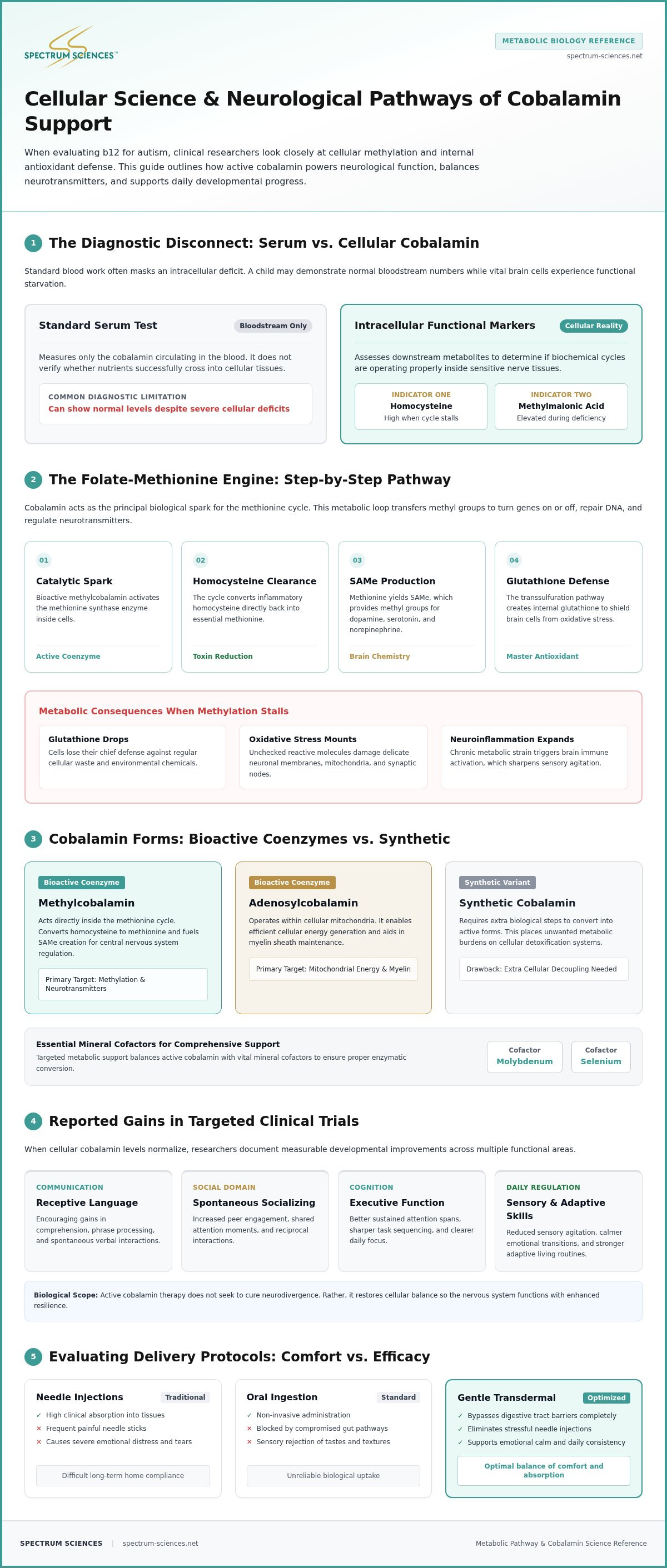
Standard blood panels frequently mask a hidden biological deficit. A conventional serum test only measures cobalamin circulating in the bloodstream. It doesn't confirm whether that nutrient actually crosses cellular membranes to do its job. Consequently, a child can show normal serum numbers while suffering from functional cellular starvation. Clinicians look at downstream metabolites to assess intracellular activity accurately. Elevated levels of methylmalonic acid and homocysteine indicate that metabolic cycles are stalled, confirming that cells are starved of active cobalamin.
Clinical Observations in Neurodevelopment
Targeted trials demonstrate encouraging developmental changes when intracellular cobalamin levels normalize. Research identifies measurable gains in receptive language, spontaneous socialization, and adaptive daily living skills. In everyday life, parents and educators often observe sharper executive function, reduced sensory agitation, and better attention spans. It's vital to view cobalamin therapy accurately. It doesn't seek to cure neurodivergence, but rather restores cellular balance so the nervous system can operate with greater ease and resilience.
How Methylation and Glutathione Impact Neurological Health
The folate-methionine cycle serves as the biological engine driving neurodevelopment. Every second, cells rely on this metabolic loop to transfer small carbon units known as methyl groups. These methyl groups turn genes on or off, repair damaged DNA, and maintain cell membranes. When evaluating b12 for autism, scientists observe that disruptions in this cycle trigger a cascade of metabolic bottlenecks. A comprehensive systematic review and meta-analysis highlighted that targeted cobalamin therapy helps normalize abnormal methylation metabolites and rebuilds cellular redox capacity in developing children.
The Methionine Cycle and Neurotransmitter Synthesis
Methylcobalamin acts as an essential catalyst inside the methionine cycle. It directly converts the inflammatory compound homocysteine back into methionine. This conversion allows the body to generate S-adenosylmethionine, commonly called SAMe. Cells rely on SAMe to synthesize critical neurotransmitters like dopamine, norepinephrine, and serotonin. Without enough active cobalamin, SAMe production drops significantly. This depletion can destabilize mood regulation, impair focus, and hinder emotional balance throughout daily activities.
Glutathione Depletion and Environmental Vulnerability
Downstream from the methionine cycle sits the transsulfuration pathway, which produces glutathione. Glutathione serves as the body's master intracellular antioxidant. When methylation stalls, transsulfuration falters as well:
- Glutathione synthesis falls: Cells lose their primary defense mechanism against everyday cellular waste and environmental chemicals.
- Oxidative stress accumulates: Unchecked reactive molecules damage delicate neuronal membranes, mitochondria, and synaptic connections.
- Neuroinflammation spreads: Chronic metabolic strain triggers immune activation in the brain, heightening sensory sensitivities.
Restoring smooth methylation flow allows cells to replenish their internal glutathione reserves naturally. Utilizing pure transdermal solutions like Activated B12 Oil provides direct metabolic fuel without adding digestive distress. By clearing oxidative waste and calming cellular inflammation, the central nervous system gains the biological stability it needs to process sensory information effectively.
Forms of Cobalamin: Comparing Methyl-B12 and Adenosyl-B12
Selecting the right biochemical variant changes how the body utilizes b12 for autism. Many commercial products rely on cheaper synthetic compounds that require extensive metabolic conversion. In contrast, the human body naturally operates using two bioactive coenzyme partners: methylcobalamin and adenosylcobalamin. Scientific literature examining DNA methylation in autism demonstrates that cellular pathways require active methyl groups to manage gene expression properly. Providing pre-activated coenzymes ensures immediate biological availability without placing unnecessary conversion burdens on sensitive metabolic systems.
| Cobalamin Form | Metabolic Location | Primary Physiological Duty | Cellular Burden |
|---|---|---|---|
| Methylcobalamin | Cell Cytosol | Drives methylation cycle, homocysteine remethylation, neurotransmitter production | None; immediately bioavailable |
| Adenosylcobalamin | Mitochondria | Converts methylmalonyl-CoA to succinyl-CoA for cellular ATP synthesis | None; immediately bioavailable |
| Hydroxocobalamin | Bloodstream / Intracellular | Scavenges nitric oxide, converts into active forms downstream | Low; requires internal activation |
| Cyanocobalamin | None (synthetic) | Must undergo decyanation to release toxic cyanide molecule before use | High; depletes cellular glutathione |
The Dual Coenzyme Strategy: Cytosol and Mitochondria
Complete metabolic support requires addressing two distinct cellular environments. Methylcobalamin operates primarily within cellular fluid, directing DNA methylation and neurotransmitter synthesis. Meanwhile, adenosylcobalamin works exclusively inside mitochondria. It regulates the breakdown of amino acids and fatty acids to produce energy. Many children on the spectrum experience mitochondrial dysfunction alongside methylation blocks. Supplying both active forms simultaneously ensures that the brain receives both neurotransmitter regulation and vital cellular stamina.
Why Synthetic Cobalamin Forms Fall Short
Synthetic cyanocobalamin creates unintended physiological obstacles. The body must first strip away its cyanide molecule through an enzymatic process called decyanation. This demanding step consumes precious intracellular glutathione and methyl groups that sensitive systems cannot spare. In an individual already dealing with impaired detoxification, synthetic vitamins simply place extra strain on fragile pathways. Bioidentical coenzymes bypass these conversion traps entirely, entering functional cellular processes the moment they arrive.
Beyond Injections and Pills: Overcoming Delivery Challenges
Administering b12 for autism often presents a difficult practical dilemma for families. Clinical research historically relied on subcutaneous injections to bypass the digestive tract. However, giving regular needle shots to a sensory-sensitive child frequently triggers fight-or-flight panic and deep emotional distress. At the same time, traditional oral supplements rarely produce measurable improvements. When gastrointestinal barriers prevent proper uptake, parents find themselves caught between traumatic needle routines and ineffective oral remedies.
The Limitations of Oral and Sublingual Supplements
Many children on the autism spectrum experience chronic gut dysbiosis, gut lining irritation, or low stomach acid. Healthy cobalamin uptake requires stomach acid, intrinsic factor secretion, and undamaged receptors in the terminal ileum. If inflammation disrupts any part of this delicate digestive cascade, oral capsules pass through the body unabsorbed. Sublingual drops attempt to bypass digestion, but they present sensory hurdles. Demanding that a child hold tart liquids quietly under their tongue creates compliance battles. As detailed in this guide on transdermal delivery vs oral supplements, avoiding the gastrointestinal tract altogether offers a far more reliable clinical path.
The Science of Transdermal Nutrient Absorption
Modern transdermal technology offers a calm, needle-free alternative. Specialized lipid carriers transport active cobalamin molecules directly across the stratum corneum, the outer layer of the skin. Once past this barrier, the nutrients diffuse directly into rich capillary beds beneath the surface. This route delivers bioactive molecules into systemic circulation without encountering gastric acid or liver breakdown. For families utilizing b12 for autism, gentle topical oils can be applied smoothly during quiet moments or sleep. To review the kinetic research behind this delivery method, read our detailed analysis of transdermal b12 absorption rate.
Designing a Cohesive Metabolic Support Protocol
A successful wellness routine requires more than simply introducing cobalamin in isolation. When using b12 for autism, speeding up methylation without adequate nutritional cofactors can cause cellular friction. As the methylation engine turns faster, downstream biochemical pathways demand extra mineral support to process metabolic byproducts cleanly. Starting with conservative doses allows sensitive systems to adapt smoothly while preventing temporary overstimulation or irritability.
Essential Cofactors: Minerals and Multivitamins
Accelerating the methionine cycle pushes higher volumes of sulfur compounds into the transsulfuration pathway. If the body lacks key trace minerals, these compounds can accumulate and cause discomfort:
- Molybdenum Oil (Molybdate): The sulfite oxidase enzyme depends on molybdenum to convert reactive sulfites into benign sulfates. This step prevents sulfur buildup during active methylation.
- Selenium Oil (Selenite) and Iodine Oil (Iodide): These minerals support healthy thyroid function and cellular antioxidant enzymes, ensuring consistent energy regulation.
- Protocol Support Multivitamin & Mineral Supplement: A broad-spectrum formulation delivers foundational micronutrients, keeping complementary enzymatic pathways operating in harmony.
Introducing these cofactors creates a balanced nutritional foundation. When cells receive complete mineral support, the body processes active cobalamin efficiently without unwanted metabolic logjams.
Tracking Progress with Functional Testing
Objective biological data removes the guesswork from dosage adjustments. Rather than relying on subjective trial and error, clinicians frequently utilize an Organic Acids Test (OAT) to track cellular responses over time. This comprehensive urine assessment measures key metabolic markers directly:
- Methylmalonic Acid: Indicates whether intracellular adenosylcobalamin levels are meeting mitochondrial demands.
- Neurotransmitter Byproducts: Evaluates the turnover of dopamine, norepinephrine, and serotonin to assess SAMe production.
- Oxidative and Detoxification Markers: Shows changes in glutathione utilization and cellular defense status.
Pairing active cobalamin therapy with functional metabolic testing gives families a clear, personalized roadmap. This measured approach ensures steady, lasting neurological support tailored to your child's distinct biochemistry.
Restoring Biological Harmony for Lasting Growth
Restoring cellular balance offers a clear, scientifically grounded path toward better neurological ease. When considering b12 for autism, you don't have to choose between biological efficacy and your child's peace of mind. Gentle transdermal technology bypasses compromised gut barriers entirely, absorbing directly into circulation without the tears of painful injections.
By delivering pure methylcobalamin and adenosylcobalamin together, this protocol revitalizes both cellular methylation and mitochondrial stamina. Supporting these cycles with essential minerals and tracking progress through an Organic Acids Test gives your family a personalized, stress-free path forward.
Every step toward biological balance brings your child closer to calmer days, clearer communication, and renewed developmental confidence.
Frequently Asked Questions
How does B12 help children diagnosed with autism?
Active cobalamin fuels essential methylation pathways that regulate brain chemistry, gene expression, and cellular detoxification. In clinical research on b12 for autism, restoring cellular levels helps increase internal glutathione production, which defends fragile brain cells from oxidative stress. Children often demonstrate noticeable gains in receptive language, focus, sensory tolerance, and overall social engagement as neurological inflammation calms and cellular energy generation stabilizes.
Why do doctors recommend methyl-B12 instead of standard B12?
Doctors prefer methylcobalamin because it is a biologically active coenzyme that enters metabolic cycles immediately. Standard store supplements typically contain synthetic cyanocobalamin, which requires a difficult multi-step conversion process inside cells. Stripping the cyanide molecule from cyanocobalamin robs the body of precious glutathione and methyl groups. Methylcobalamin bypasses this metabolic bottleneck, providing clean, instant neurological support for individuals with sensitive methylation cycles.
What are the main signs that B12 therapy is working?
The earliest signs of therapeutic response often include expanded spontaneous speech, enhanced vocabulary, and clearer articulation. Parents also observe deeper eye contact, calmer transitions between activities, and increased curiosity about their surroundings. Sleep cycles often normalize as cellular circadian rhythms balance out. Because active cobalamin supports neurological processing speed, many children also display longer attention spans and improved ability to follow complex verbal instructions.
Can transdermal B12 oil replace subcutaneous B12 injections?
Yes, specialized transdermal oils provide a clinically viable alternative to subcutaneous shots. Formulations like Activated B12 Oil carry bioactive methylcobalamin and adenosylcobalamin directly across the skin barrier into systemic capillary beds. This approach bypasses gastrointestinal absorption issues completely without causing sensory trauma. For families struggling with daily or weekly needle routines, applying a gentle topical oil provides reliable cellular delivery while maintaining a calm, stress-free household environment.
Are there negative side effects from starting a B12 protocol?
While active cobalamin is exceptionally safe and water-soluble, rapid methylation acceleration can occasionally trigger temporary hyperactivity, sleep disruption, or agitation. These symptoms usually occur when cellular pathways clear trapped waste faster than trace minerals can process it. Introducing conservative doses and pairing the protocol with cofactors like transdermal Molybdenum Oil helps balance sulfur pathways and smooths out the transition without unwanted behavioral spikes.
How long does it take to observe changes after starting B12?
When introducing b12 for autism, early developmental shifts often emerge within the first two to six weeks of consistent administration. Subtle markers like improved focus, less sensory reactivity, and renewed vocalization tend to show up first. However, deeper neurological healing, cellular repair, and significant language milestones usually unfold steadily over three to six months. Sustained biological balance requires ongoing consistency, proper cofactor support, and regular tracking.
Why is an Organic Acids Test recommended alongside B12 therapy?
An Organic Acids Test (OAT) measures specific urine metabolites that reveal how cells utilize nutrients in real time. Standard blood tests merely reflect circulating vitamins in serum, masking functional cellular deficiencies. By tracking markers like methylmalonic acid and neurotransmitter byproducts, the OAT reveals whether intracellular cobalamin levels are meeting metabolic demands. This data enables parents and practitioners to personalize nutrient dosages with clinical precision rather than guesswork.